High-Tech Game Changers
Posted Oct 13, 2022 in Publisher's Page
Posted Oct 13, 2022 in Publisher's Page

Associate Publisher / Editor at LMT Communications, Inc. · Newtown, CT
At the helm of the magazine for over 40 years, Kelly is the heart and soul of the editorial department, guiding and shaping our coverage - both in print and online - to bring dental laboratory decision-makers the news and...

Associate Publisher / Editor at LMT Communications, Inc. · Newtown, CT
At the helm of the magazine for over 40 years, Kelly is the heart and soul of the editorial department, guiding and shaping our coverage - both in print and online - to bring dental laboratory decision-makers the news and information they want to know most.

Senior Features Editor at LMT Communications, Inc. · Cheshire, CT
Subscribe to LMT Magazine. It's FREE to U.S. addresses.
Scott Alexander · Crowns Gone Wild! · November/December 2026

Tundra, an 800-lb. Alaskan brown bear, and his brother, Banks--both at Lake Superior Zoo in Duluth, MN--were rescued as cubs in Alaska by the U.S. Fish...
Keith Cunning, RDT · Crowns Gone Wild! · November/December 2026
Jata, a snow leopard at Sedgwick County Zoo in Wichita, KS, fractured two of her large canine teeth and the zoo turned to our veterinary dental division...
John Eggebraten, CDT/TE · LMT Readers' Favorite Cases of the Year - 2026 · November/December 2026
This was one of my favorite cases this year, not only because of the dramatic improvement in the patient's esthetics, occlusion and phonetic function,...
Kyle Swan, CDT · LMT Readers' Favorite Cases of the Year - 2026 · November/December 2026
This patient had two periodontally involved teeth extracted. He was an older patient who was happy with his smile, so he wanted restorations that looked...
LMT Communications, Inc. · LMT Readers' Favorite Cases of the Year - 2026 · November/December 2026
By Larry Passaro and Crystal Tang Li, ND Esthetics Inc., Staten Island, NY This patient wanted a straighter, more youthful yet natural smile; the primary...
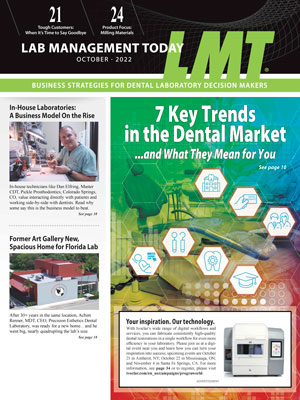
Browse all articles from the October 2022 issue of LMT Magazine